
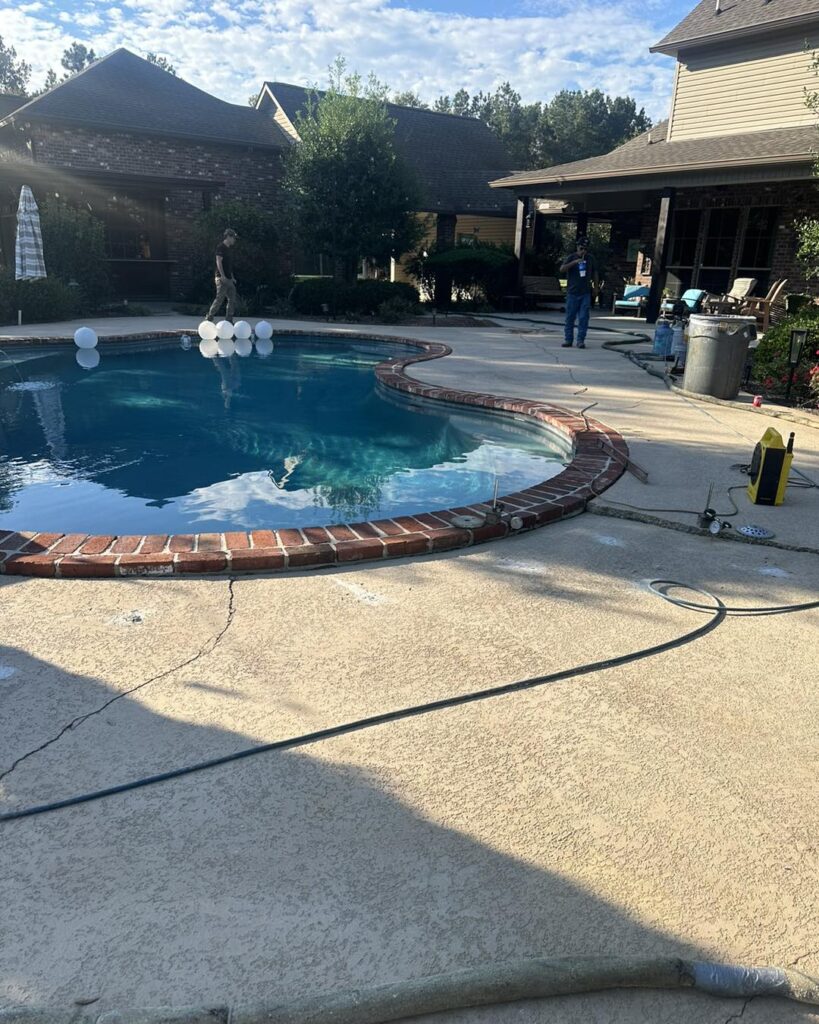
A sinking pool deck may start as a small dip near the edge of your pool. Over time, that movement can place stress on the pipes, fittings, and drains hidden below the concrete. These parts carry water between the pool, pump, filter, skimmer, and return jets. When the ground shifts, the pipes may shift with it. A small plumbing leak can then wash away more soil and cause the deck to sink even faster. Fixing the slab early can help protect both your pool deck and its filtration system.
The Concrete Can Pull on Pipes Below the Deck
Many pool plumbing lines run beneath or close to the concrete deck. These may include skimmer lines, return lines, drainpipes, and water supply lines. The pipes are made to handle water pressure, but they are not made to support the weight of a sinking slab.
When soil under the deck becomes weak, part of the concrete may drop. The slab can press down on a pipe or pull it away from a fitting. This pressure may cause a connection to loosen or a pipe to crack. Some leaks begin very small, so the pool owner may not see water at the surface right away. The leak may continue below the deck and slowly damage the soil.
Skimmer Lines Can Separate or Crack
The pool skimmer pulls leaves and other debris from the water before it reaches the pump and filter. A pipe connects the skimmer to the filtration equipment. Since the skimmer sits near the pool deck, nearby concrete movement can place stress on this connection.
A sinking section of concrete may pull the skimmer body away from the pipe or weaken the fitting. If air enters the line, the pool pump may lose suction or make unusual sounds. You may also see bubbles coming from the return jets. In some cases, the skimmer will stop pulling water as well as it once did. These signs can point to a damaged skimmer line, though a pool professional will need to test the system to find the cause.
Return Lines May Begin Leaking Underground
After water passes through the pool filter, the return lines send clean water back into the pool. These lines may also run under the deck. If the concrete shifts, it can bend the lines or place extra pressure on their joints.
A cracked return line can release water into the soil each time the pump runs. This can make the ground beneath the pool deck softer. As more soil moves or washes away, empty spaces can form under the slab. The concrete may then sink farther, which adds even more pressure to the plumbing. This cycle can turn a small deck problem into a larger concrete and pool repair.
Water Leaks Can Make the Deck Sink Faster
Louisiana already has soft soil, heavy rain, and a high water table in many areas. A leaking pool line adds more water to the ground. Wet soil may lose its strength, especially if water carries small soil particles away from beneath the concrete.
You may notice that one part of the pool deck keeps dropping after it has already started to settle. New cracks may appear, or an old crack may become wider. Water levels may also fall faster than normal. While heat can cause some pool water to evaporate, a steady or sudden drop may point to a leak. The soil and plumbing should be checked before the damage spreads.
Uneven Concrete Can Affect Deck Drains
Pool decks are built with a small slope so water can move away from the pool. When one section sinks, water may flow in the wrong direction. It can collect near the pool edge, around the skimmer, or over a deck drain.
Standing water can enter cracks and reach the soil beneath the slab. A shifted slab may also place pressure on drain channels and drainpipes. If a drain connection breaks or becomes uneven, water may not leave the area as planned. Poor drainage can weaken the ground and increase the risk of more settling.
Signs That Your Pool Deck and Plumbing Need Attention
Watch for cracks between the pool deck and coping, low spots, loose skimmer parts, standing water, or sections of concrete that no longer line up. Plumbing warning signs may include a falling pool level, weak water flow, air bubbles in the return jets, wet soil near the deck, or a pump that has trouble staying primed.
These signs do not always prove that a pipe is broken. A pool technician can test the plumbing, while a concrete lifting professional can inspect the slab and the soil beneath it. Both problems should be checked because lifting a slab without locating a damaged line may leave the main cause untreated.
Lift the Pool Deck Before the Damage Grows
Polyco uses polyurethane foam injection to fill empty spaces beneath sunken slabs and carefully raise uneven concrete. The material is lightweight, strong, and causes less disruption than removing and pouring a new deck. Before work begins, the team can review the area and identify where pool lines may be located.
If your pool deck is sinking, early repairs may help reduce pressure on nearby pipes and prevent water from causing more soil loss. Contact Polyco today for professional concrete lifting in New Orleans and request an estimate for your uneven pool deck.