
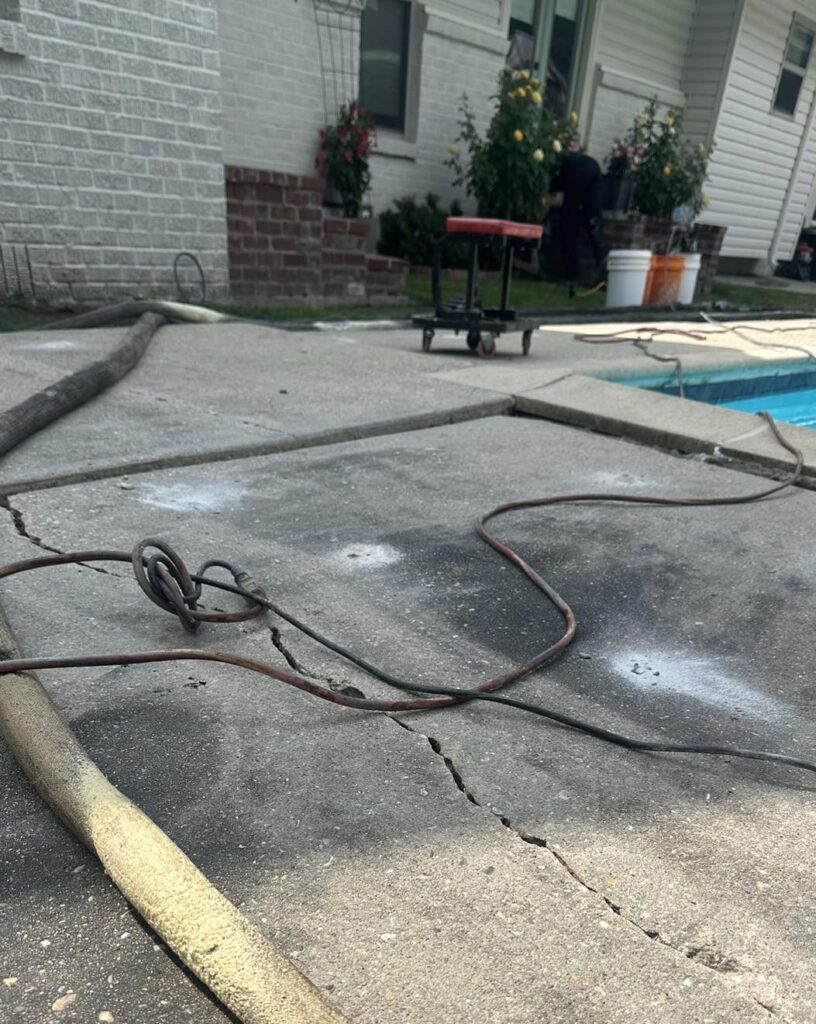
A concrete patio should stay smooth and strong. But over time, cracks can start to form. You may see thin lines at first. Later, those cracks grow wider and spread across the surface.
Cracks are not just about how your patio looks. They are a sign that something is wrong under the slab. If you ignore them, the damage can get worse.
Here is what causes cracks and what you can do to fix them.
Why Concrete Patios Crack
Cracks form when the ground under your patio starts to move. In Baton Rouge, soil movement is very common. The ground expands when wet and shrinks when dry. This puts stress on the slab.
Water can also weaken the base. Rain can wash soil away from under the concrete slab. This creates empty spaces that make the patio unstable.
Heat and weather changes also affect concrete surfaces. Over time, this leads to pressure inside the slab, which causes cracking.
Tree roots and heavy weight can also play a role. All of these factors lead to damage in your outdoor patio surface.
Check the Size and Type of Cracks
Not all cracks mean the same thing. Some are small and only affect the surface of your patio slab. Others show deeper problems.
Hairline cracks are thin and often come from normal drying. These may not affect the strength of the slab.
Wider cracks or uneven edges are more serious. If one side is higher, it means the slab is shifting.
Cracks that keep growing are a warning sign. They show that the ground under your concrete patio is still unstable.
Understanding the type of crack helps you choose the right repair.
Do Not Ignore the Problem
It may seem easy to leave small cracks alone. But cracks let water move under your patio surface. This weakens the soil over time.
As water builds up, it washes away support. The slab can start to sink. This leads to more cracks and uneven areas.
What starts as a small issue can turn into a larger repair if left untreated.
Avoid Quick Surface Fixes
Filling cracks with sealant may improve how your patio looks, but it does not fix the cause.
If the soil under the slab is weak, the patio will keep moving. New cracks will form even after patching.
Surface repairs only hide the issue. They do not fix the base under your concrete slab.
Fix the Root of the Problem
The real problem is below the surface. When soil shifts or washes away, your patio needs support again.
This is where concrete lifting in Louisiana comes in. This method lifts the slab and fills empty spaces under it.
A special foam is injected under the sunken patio. As it expands, it raises the slab and stabilizes the base.
Concrete lifting helps stop movement and supports the slab from below. It also helps prevent future cracks from forming.
When Replacement Is Needed
Some patios are too damaged to repair. If the concrete surface is badly broken, lifting may not be enough.
This is not common. Many patios can still be saved with concrete lifting in Louisiana.
A proper inspection helps decide the best option for your outdoor concrete patio.
Keep Your Patio Strong
After repair, simple steps can help protect your patio. Make sure water drains away from your concrete slab. Do not let water sit near the edges.
Watch for early signs like small cracks or slight sinking. Fixing problems early keeps your patio surface in good shape.
A stable base helps your patio last longer and stay level.
Fix Cracks Before They Get Worse
Cracks in your concrete patio will not go away on their own. In Baton Rouge, soil movement makes the problem worse over time.
If you see cracks forming or spreading, take action now. Concrete lifting in Louisiana can restore your patio and stop further damage.
Contact Polyco Spray Foam today for a free estimate and bring your patio surface back to a safe, level condition.