
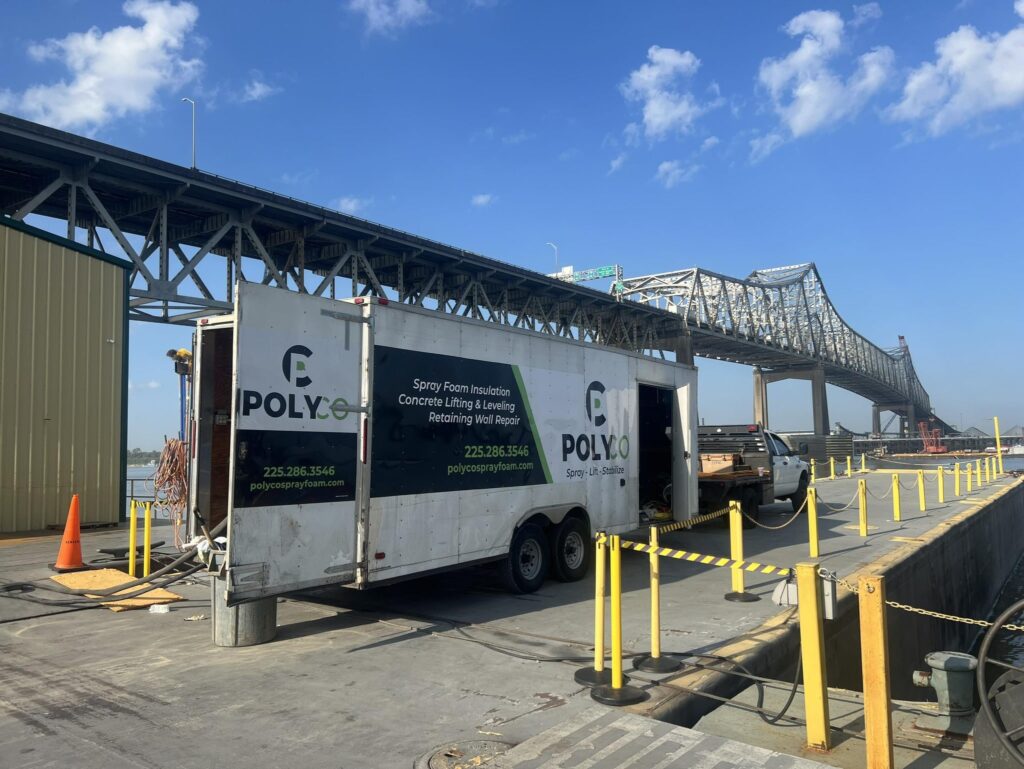
When you’re thinking about concrete lifting in Louisiana, one of the first questions many homeowners and business owners ask is how thick the concrete slab needs to be to support a lift or leveling project. Whether you’re considering polyurethane foam lifting on a driveway, garage floor, patio, or commercial slab, understanding slab thickness helps ensure a successful repair that lasts. In this guide, we’ll break down what thickness matters, why it matters, and how you can be confident your slab is ready for the job.
Why Slab Thickness Matters
The thickness of a concrete slab plays a big role in how well it performs under load and how suitable it is for any repair or lifting work. A slab that’s too thin may not distribute weight evenly or withstand the stresses of heavy vehicles, foot traffic, or shifting soil conditions over time. In areas like Louisiana, where moisture-sensitive clay soils and frequent rain can cause soil movement, having a solid slab foundation becomes even more critical. When concrete lifting in Louisiana is needed, thickness combined with proper soil support can make all the difference in avoiding future settlement and ensuring long-lasting results.
Standard Slab Thickness Guidelines
Typical residential concrete slabs—such as those in driveways and garage floors—are often poured at around 4 inches thick. This thickness serves well for everyday use and light vehicles. In many cases, this same thickness provides enough surface for most concrete lifting in Louisiana jobs, particularly when using modern polyurethane foam injection techniques that don’t rely on heavy backfill materials. However, if your slab will support heavier loads, such as larger trucks or commercial equipment, a thicker slab may be recommended.
For example:
- Residential garage floors or driveways supporting light to medium vehicles: at least 4 inches of concrete.
- Heavier commercial or industrial areas with heavier equipment or frequent heavy loads: 5–6 inches or more may be ideal.
These figures are general guidelines. The specific needs for your property depend on soil conditions, load demands, and local building norms.
How Slab Thickness Works With Foam Lifting
When PolyCo tackles a concrete lifting in Louisiana project, the goal is to restore your slab to a safe, level condition while stabilizing the soil beneath it. Polyurethane foam injection works by expanding beneath the slab, filling voids, and lifting the concrete back to its original position. Because the foam is lightweight and cures quickly, it doesn’t add unnecessary stress to the slab or ground the way traditional mudjacking might. This makes slab thickness less of a limiting factor than with older methods, because the foam supports the slab without requiring it to bear extra material weight.
Still, that slab still needs enough mass to distribute load. A slab that’s too thin might flex or crack, reducing the effectiveness of the lift and potentially leading to future issues. This is particularly important in Louisiana’s shifting soils, where the combination of moisture, clay expansion, and contraction can put pressure on concrete surfaces.
Reinforcement, Soil, and Structural Support
Thickness on its own isn’t the whole story. Reinforcement—such as wire mesh or rebar—plays a big role in how resilient a slab will be under stress. Reinforced slabs resist cracking and distribute weight more evenly, which helps greatly during and after concrete lifting in Louisiana.
Likewise, the condition of the base material beneath the slab matters just as much as thickness. A well-compacted gravel or soil base helps the slab perform better and reduces the root causes of unevenness. Even with a thick slab, poor soil support can lead to settling and more frequent lifting needs.
Pre-Lift Inspection and Evaluation
Before any lifting work, it’s always wise to have a professional evaluate your slab. A qualified concrete lifting team will look at thickness, reinforcement, existing cracks, and soil conditions to determine the best approach. In many cases, slabs that meet or exceed minimum thickness standards can be lifted and stabilized quickly with foam injection, often in just a matter of hours.
This inspection also lets you address any long-term risk factors before problems worsen. In Louisiana’s unique environment, acting early can prevent more costly repairs later.
Final Thoughts
Concrete slab thickness is a key part of ensuring successful concrete lifting in Louisiana, but it works together with soil conditions, reinforcement, and intended use. Most residential slabs start around 4 inches thick, and that’s often sufficient for modern foam lift methods, especially when soil and reinforcement are adequate. Thicker slabs and proper reinforcement further enhance durability and performance, particularly in heavy-use areas.
If you’re unsure whether your slab is thick enough or ready for a lift, let PolyCo’s experts take a look. We provide fast, affordable evaluations and use advanced polyurethane foam techniques to restore your concrete safely and effectively.
Ready to get started with your concrete lift? Contact us today for a free assessment and see how we can help solve your uneven concrete challenges with reliable concrete lifting in Louisiana.